
Key takeaways for caregivers
- Attachment security, or how safe and supported an infant feels with their caregiver, develops from the way caregivers communicate, both during challenging moments (e.g., separations, reunions) and in low-stress situations (e.g., everyday playtime).
- Mothers who accurately notice and comment on their baby’s feelings during typical, low-stress situations exhibit mind-mindedness, which helps infants feel understood and supports secure attachment.
- Mind-mindedness during everyday play predicts higher levels of infant comfort during times of stress, a key factor in fostering secure attachment.
This piece was written by Ishani Bharadwaj in collaboration with study author Elisabetta Lombardi. It is based on research originally published in Lombardi, E., Di Dio, C., Meins, E., Giovanelli, C., Crippa, F., Traficante, D., Marchetti, A., & Carli, L. L. (2024). Inter-relations between mind-mindedness, maternal communicative style in the context of attachment distress, and infant-mother attachment security. International Journal of Behavioral Development, 49(3), 288-298.
What is secure attachment?
Babies come into the world completely dependent on their caregivers for survival. They form their first social bonds, or attachment relationships, with their caregivers, who are usually their parents. In these relationships, caregivers take care of their infants, soothe them, and respond to their physical needs (e.g., hunger, safety, comfort).
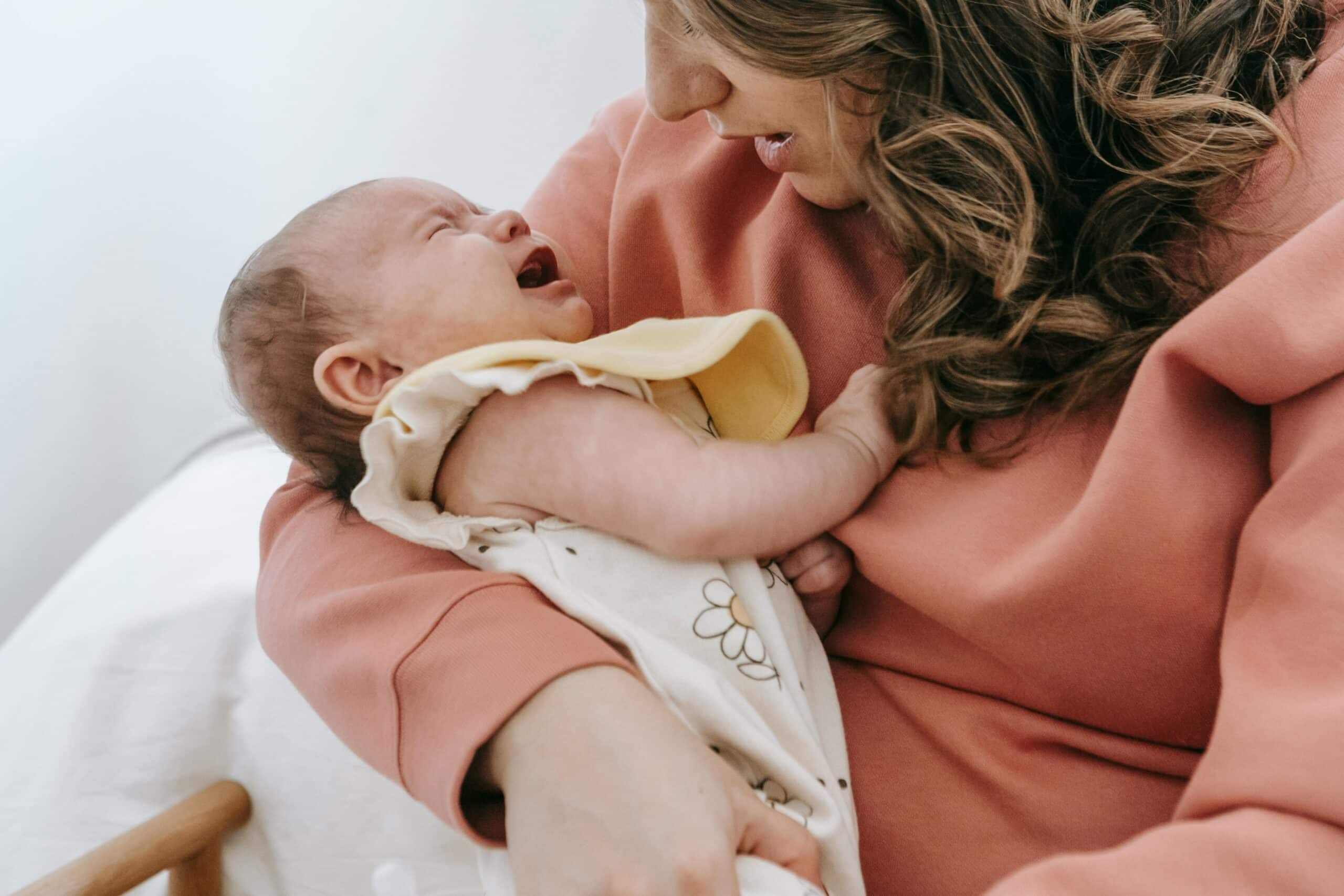
Photo by Sarah Chai on Pexels
Attachment security refers to how safe and secure an infant feels with their caregiver. Beyond meeting basic needs, these attachment bonds also serve as infants’ first blueprint on how relationships work, including what to expect from others and how emotions are shared and responded to. Therefore, attachment experiences early in life can influence how infants relate to others as they grow older.
When infants’ needs are consistently met and caregivers respond with care and comfort during times of distress, infants are more likely to develop a secure and positive view of the world, seeing it as a safe and predictable place, and to believe that they are worthy of care.
Conversely, when their needs are unmet or their caregivers are unresponsive or neglectful, infants may come to view the world as untrustworthy and experience difficulties forming social relationships later in life.
Communicative style: How caregivers respond to their infants in moments of stress
Caregivers’ communicative style, or the way they communicate with and respond to their infants, especially during stressful situations, plays a very important role in the development of secure attachment.
Caregivers reflect their communicative styles during times of stress. When a baby is crying, their caregiver might offer emotional support and comfort or they might deny support or confuse the infant with misleading information about the stressful situation. Children whose caregivers provide warmth and support are more likely to be securely attached than children whose caregivers do not.
Mind-mindedness: Caregivers’ attunement to their infant in low-stress situations
Mind-mindedness refers to the caregiver’s ability to recognize the child’s internal states, such as emotions, desires, and thoughts, attune to them, and respond appropriately, even in everyday low-stress situations.
A caregiver’s comment is considered accurate when it is consistent with the child’s behavior in the context of the interaction. Caregivers infer how their infant is feeling by observing cues such as facial expressions, body movements, where the infant is looking, vocal utterances, and changes in their emotional expression (e.g., crying).
Mind-mindedness captures the caregiver’s ability to stay closely aligned with the child’s experience, even before the child can express it in words.
A mind-minded caregiver does not guess what their child is thinking or feeling, but shows sensitivity to the child’s signals and responds in a way that is consistent with those signals. In this sense, mind-mindedness captures the caregiver’s ability to stay closely aligned with the child’s experience, even before the child can express it in words.
An example of a mind-minded response
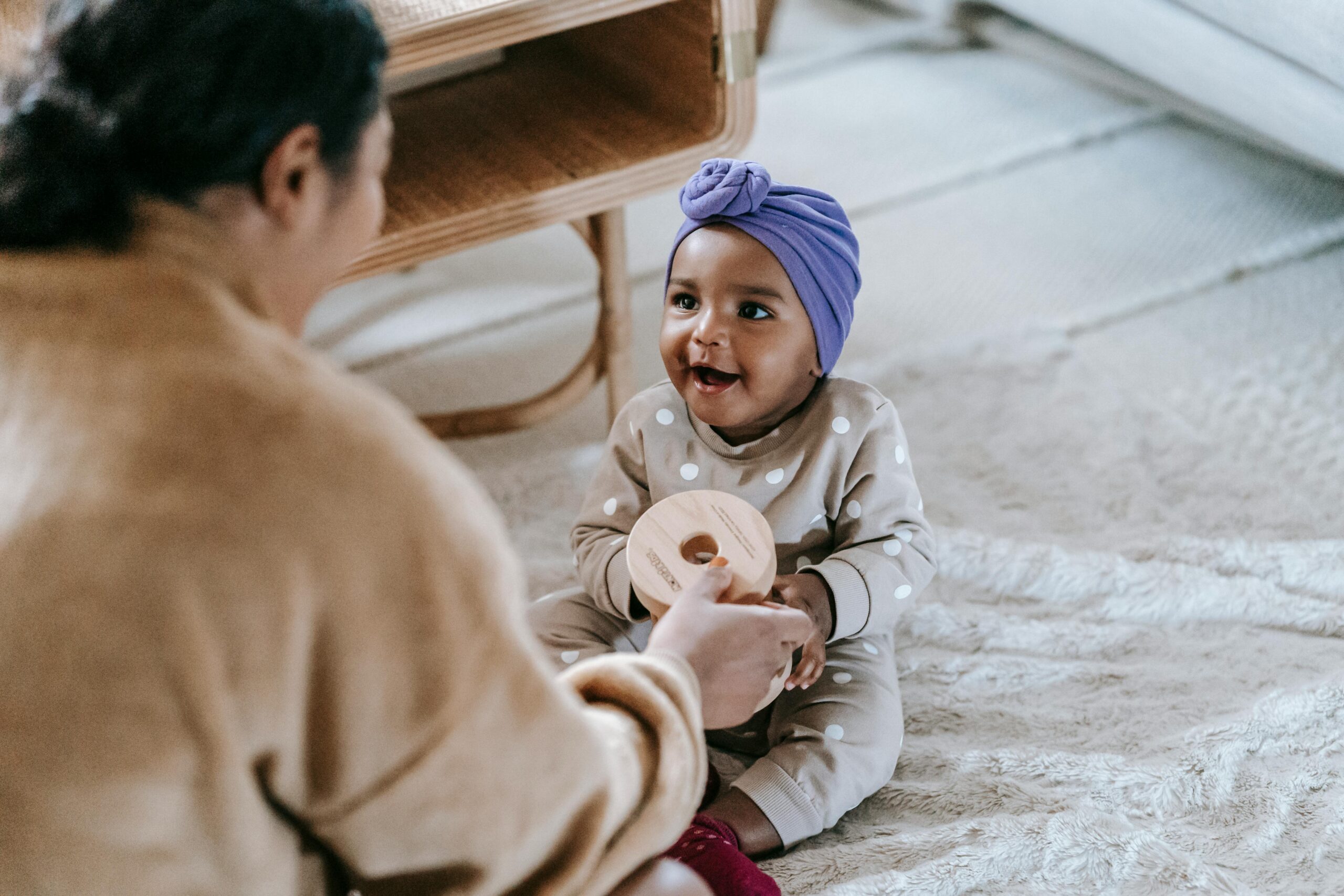
Following is an example of a mind-minded interaction between a one-year-old and their mother as they play together.
The infant is sitting on the floor playing with a toy. The toy suddenly slips out of their hand, and the baby’s face scrunches as they start to whimper. The mother moves closer, makes eye contact, and gently says, “Oh, that surprised you! You look frustrated that the toy fell. Let’s get it back so you can keep playing.” The mother hands the toy back and gives the infant a reassuring smile.
The mother’s behavior shows mind-mindedness by accurately interpreting the infant’s distress, commenting on it, and then reassuring the child.

An example of a non-mind-minded response
In contrast, non-attuned or non-mind-minded comments misinterpret, contradict, or minimize a child’s apparent emotional experience. The caregiver might actively ignore the child’s distress or distract them from it. For example, imagine if the mother in the first example briefly looked at the infant and said in a light, dismissive tone, “Oops! That’s nothing – look over here!” She might immediately offer another toy to distract the infant without acknowledging or commenting on the child’s frustration or distress.
In this example, although the mother may register that their infant is upset, they do not stay with the infant’s emotional experience or reflect it back to them. Instead, the infant’s emotion is deflected rather than named or validated.
Our study: Examining the role of mothers’ mind-mindedness in babies’ secure attachment
It is well established that a mother’s communicative style with their infant in a high-stress situation plays a huge role in the infant’s attachment security. In our research, we focused on the role of mothers’ mind-mindedness during low-stress situations in this relationship between their communicative style and attachment security. We sought to determine whether mothers’ mind-mindedness in low-stress situations was related to more emotional support during high-stress situations and, in turn, to attachment security.
We conducted our study in Milan, Italy, with 88 native-born mothers who were raised in Italy and their infants. All mothers were 26 to 45 years old, and their infants were 12 months old.
Almost all the mothers lived with spouses or partners, and about a quarter had given birth only once (suggesting that many of the infants were likely the only children in the home). The mothers were highly educated, with all having completed high school and three quarters having earned a university degree.
Because the mothers shared many characteristics, our findings may not reflect the experiences of all families. The patterns we observed may differ in families from other cultural backgrounds and with different education levels, or when considering the role of fathers and other caregivers.
The Strange Situation Procedure
We used the well-established Strange Situation Procedure to measure infant-caregiver attachment security. In this task, researchers observed each child and their mother during a series of brief (3-minute) separations and reunions in an unfamiliar family-friendly laboratory.
At the start of the procedure, the infant and mother entered the new environment together, and then were joined by a stranger from our research team. Then the following occurred:
Stage 1: Mother and Baby – The mother and infant enter the room, and the infant is introduced to the environment.
Stage 2: Mother, Baby and Stranger – A stranger enters the room.
Stage 3: Stranger and Baby – The mother leaves the infant with the stranger (first separation).
Stage 4: Mother Returns – The mother returns and the stranger leaves (first reunion).
Stage 5: Mother and Baby – The infant is once again alone with the mother.
Stage 6: Mother Leaves – The infant is left alone (second separation).
Stage 7: Stranger Returns – The stranger enters and attempts to comfort the infant.
Stage 8: Mother Returns and Stranger Leaves – The mother re-enters and the stranger leaves (second reunion)
Exploring infants’ attachment security and mothers’ communicative style
To examine infants’ attachment security, we looked at how they reacted during the reunions with their mothers (numbers 2 and 5): Did they cry in a way that was difficult to pacify/calm/soothe? Did they seek their mothers for comfort or did they avoid them?
To explore mothers’ communicative style, we also observed mothers’ verbal communication to see how they reacted to their child’s behavior upon reuniting: Did they use denial communication by refusing or disapproving of the child’s behavior? Did they use misleading communication by providing confusing information that was not attuned to the child’s experience and could distort what the child was feeling? Did they provide emotional support by reassuring and comforting the child?
Mind-mindedness in a free-play setting
To measure mothers’ mind-mindedness, we visited the mothers and their infants in their homes for 25 minutes of mother-child playtime. This allowed us to observe mothers and infants in a familiar, low-stress environment.
Specifically, we looked for mothers’ mind-related comments, verbal statements in which mothers referred to what their child might be thinking or feeling. This included mothers’ labeling of infants’ feelings (e.g., “You’re frustrated”) and comments spoken on behalf of the infant (e.g., “I’m scared,” said from the infant’s perspective).
We categorized comments as appropriate when they reflected what the child appeared to be experiencing. We considered both the content of the mothers’ words and other components of their responses (e.g., body language, facial expressions, vocal intonation). We then coded the proportion of maternal responses that were appropriate (i.e., attuned to the infant’s internal state) versus those that were non-attuned.
Goal 1: Confirming links between mothers’ communicative styles and infants’ attachment security
Our first goal in this study was to confirm the association (established in earlier research) between mothers’ communicative styles and infants’ attachment security. Our findings were consistent with research that has established links between mothers’ more supportive communication and infants’ secure attachment.
When mothers showed emotional support by accurately understanding and acknowledging their child’s distress and comforting them instead of redirecting or distracting them, infants showed signs of secure attachment. That is, when infants cried or became mildly distressed during separation, they quickly reestablished contact when their mother returned.
In contrast, when mothers misunderstood what their child was feeling and communicated in misleading ways by confusing the child or distanced the child instead of soothing them, infants were more likely to show insecure attachment during reunions. These infants appeared unsure of how to react when their mother left and returned. During reunions, despite wanting comfort and closeness, they resisted being held or soothed or seemed indifferent to their mother returning.
Goal 2: Mind-mindedness during play was also related to attachment security during reunions
Our second goal was to explore the role of mind-mindedness in the links between mothers’ communicative style and infants’ attachment security.
Mothers who appropriately interpreted and commented on how their child was feeling during casual playtime (i.e., those who showed strong mind-mindedness) also tended to provide comfort and support during the stressful Strange Situation Procedure (i.e., their communicative style emphasized emotional support).
Mothers who embody mind-mindedness tend to raise children who are more securely attached.
Furthermore, mothers’ mind-mindedness directly predicted children’s attachment security. Mothers who embody mind-mindedness tend to raise children who are more securely attached. This means that the way mothers use mind-minded comments during low-stress, daily situations (e.g., while playing with their infants at home) relates to how secure their children feel in more high-stress situations (e.g., when they are separated).
These links between mind-mindedness and both mothers’ communicative style and infants’ attachment security provide new insights about established connections between communicative style and attachment.


Mothers’ mind-mindedness strengthens the link between mothers’ emotional support and infants’ secure attachment
Mind-mindedness related most closely to how emotionally supportive mothers were rather than to mothers’ communication overall or to other aspects of their communicative style (i.e., their tendencies to be dismissive or confusing).
This aspect of communicative style – emotional support – contributed to secure attachment not only on its own, but also indirectly through mind-mindedness. Emotional support was linked to mothers’ ability to make appropriate comments about their child’s mental states, which, in turn, strengthened attachment security.
These findings suggest that being emotionally supportive is important for the attachment bond, but it becomes even more effective when mothers can also think about and accurately comment on their child’s thoughts and feelings.
Raising securely attached infants: Practical implications for caregivers
To raise a child who is securely attached to their caregivers, it is important to provide comfort during challenging situations but also to embody mind-mindedness in everyday interactions with the child. In short, infants are more likely to develop secure attachment when their mothers offer emotional comfort and show they have a good understanding of what their baby is thinking or feeling.
To foster secure attachment with their infants, parents and other caregivers can:
- Acknowledge all their child’s emotions: Notice and respond to what the child seems to be feeling, including harder emotions like frustration, sadness, or fear.
- Appropriately name the emotions out loud: Help the child understand their feelings by putting them into words (e.g., “You’re upset because the block fell over”).
- Avoid misleading or dismissive responses: Try not to send confusing or distorted signals (e.g., by providing a cheerful distraction when the child is clearly distressed), which can make it harder for the child to understand and recognize their emotions and to feel emotionally understood.
- Support their child in calming down: Offer comfort, strategies, or guidance to help them regulate their emotions (e.g., taking deep breaths together, offering a hug, helping them solve a problem).


