
The Family Dinner Project is based in Boston, MA, so we’re used to being surrounded by reminders of our nation’s history. In this part of the country, where echoes of the Revolutionary War era are everywhere, it’s easy to find yourself suddenly daydreaming and trying to imagine what life would have been like back then. Of course, as America’s 250th anniversary approaches, those thoughts and questions are more prevalent than ever, both here in Boston and all across the country.
We’re obviously apt to think about history partially through the lens of food and families. What would family dinners have been like in 1776? History suggests that the concept of a “family dinner” may not have truly existed for many families; most of America’s colonists lived in homes without a large enough table or enough seating for everyone to gather at the same time. Dining tables (and dining rooms) were more common in Europe and had only begun to appear here among the upper classes. Thomas Jefferson’s home, Monticello, was notably one of the first known American houses built with a dedicated dining room, just four years before the signing of the Declaration of Independence. By 1776, it’s safe to say, the trend hadn’t trickled down to the average American family just yet. To combat space challenges and accommodate the chores and routines of daily life, people might have eaten in shifts – not so different from busy families today! – and would have been more likely to eat their “dinner” at mid-day.
As for what was on the table, menus were dictated by regional availability, season, and social status. On July 4th, 1776, the average family would likely have been eating whatever produce came from the kitchen gardens, farms, and forests around them, along with fish or wild game, depending on where they lived and what was accessible. They might have had beans, bread – either wheat or corn-based – or Johnnycakes, and corn puddings or fruit pies. By contrast, the upper classes celebrated Independence with more lavish, multi-course menus. Here in the Boston area, John and Abigail Adams are famously said to have invited friends to share the “very American” meal of turtle soup, poached salmon and eggs in cream sauce, and apple pandowdy.
It’s not hard to envision what people might have talked about as they shared their meals. 250 years ago this July, politics, government, and the future of a nation were certainly on everyone’s minds. Today, those themes still resonate. So as we look towards the 250th anniversary of American independence, we encourage you to explore some of the following resources to help your family practice civic dialogue and reflect on the past, present, and future, just as families would have done in 1776.
Food

Believe it or not, macaroni and cheese is a historic choice for July 4th! Thomas Jefferson was a big fan of the dish and served it frequently. Try the easy recipe below, or check out this demonstration from Thomas Jefferson’s Monticello.
Clancy Harrison’s Easy Mac and Cheese
Fun
Ice cream was another Jeffersonian treat. He’s credited with helping popularize one of the first written recipes for ice cream. His probably didn’t include a dance party, but yours can!
Conversation
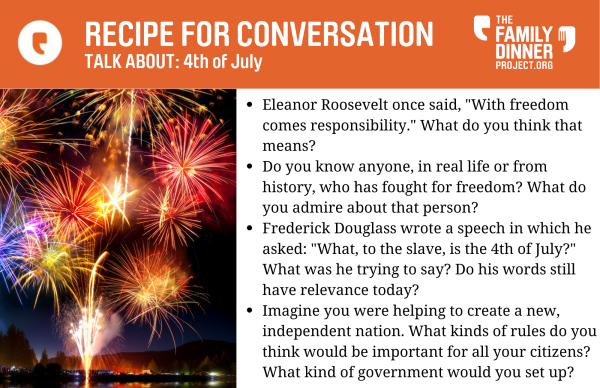
There’s lots to talk about as we reflect on our civic values. Try these collections of conversation starters to shape your discussion about our past, present, and future.


