German federal states are migrating tens of thousands of civil service desktops away from Microsoft, the French ministry of education runs Nextcloud for 400,000 staff, the Dutch government has commissioned detailed governance documentation for the platform, and Amnesty International Spain has hosted its own collaboration infrastructure on it for over a decade.
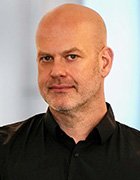
“The European Commission did a study about the impact of open source in Europe, and they mentioned us as a poster child of a successful open source company,” says Frank Karlitschek, the founder and chief executive of the open source collaboration suite that bears his ambition. The platform is growing at 50% to 60% a year.
And yet the entire operation employs around 170 people, spread across 30 countries. “Sometimes I ask myself how we can be the champion with just 170 people,” he says. “Also, I’m sometimes wondering why there are not more companies and startups like us, because for me the opportunity is so obvious.”
Karlitschek grew up in a small house south of Stuttgart, Germany, with his parents and a brother. By the age of 12, he knew he wanted to do something with computers. His parents had bought him a PC compatible, a machine so devoid of entertainment that none of the games his friends played on their Commodores and Amigas would run on it. So he wrote his own. “I wanted to play Tetris,” he says, “but there wasn’t a Tetris on my PC, so I had to build it myself.”
He taught himself to code the way people did before YouTube existed – by borrowing books from the public library, studying them, and then going back for the next one. With a group of friends, he wrote mathematical graphing software and sold it. The same group made a habit of hacking the school’s computers, until a teacher turned the problem into a solution. “At some point the teacher said, ‘Okay, then you fix it yourself, please’,” Karlitschek recalls. “I got a job to fix the infrastructure there.”
Although he always knew he wanted to work in the computer business, he made sure he had something to fall back on. His parents were avid scuba divers, and the family went diving regularly. A scuba diving instructor course became his plan B.
“I thought, ‘Okay, if this computer stuff doesn’t work, then I will be the cool scuba diving instructor somewhere in the Maldives, laying in a hammock the whole day’.” He pauses. “In hindsight, maybe not so realistic, but it’s always good to have a plan B.”
However, his plan A moment came in 1995, when a friend showed him the first beta of the KDE Linux desktop. It had a start menu, a file manager, a mail client. “It struck me that volunteers from all over the internet, who didn’t even know each other in person, would collaborate and produce something as good as what comes from the big tech companies.”
“The European Commission did a study about the impact of open source in Europe, and they mentioned us as a poster child of a successful open source company”
Frank Karlitschek, Nextcloud
The realisation that ordinary people had built the infrastructure of the digital world, and that he could change it if he wanted to, never left him. The KDE project drew him in. He contributed, took on more responsibility, and eventually became vice-president of its foundation.
But over the years, he watched the same thing happen again and again. Talented contributors would join as students, pour their energy into the software and then graduate, find jobs, start families and quietly disappear. “Volunteer jobs were no longer compatible for them,” says Karlitschek. It was painful to watch, and it planted a question that would shape everything he did next. Was there a way to let people pay their bills by doing open source?
An expensive lesson
Karlitschek’s first startup, hive01, built social networks for open source communities. It was, he says, “comparable to Facebook before Facebook”. The venture was profitable but never grew beyond a handful of employees, and he moved on.
What came next grew out of a discomfort that had been building for years. By the late 2000s, software was migrating to the cloud at speed. Dropbox stored your files, Google handled your mail and documents, and an expanding roster of software-as-a-service (SaaS) companies took care of everything else. The applications and the data were no longer on your own machine.
For Karlitschek, who had grown up with a computer in front of him whose hard drive held his data and ran applications he understood, that shift felt fundamentally wrong. “I still had a computer, but the computer was not really the control point anymore,” he says. “All my private stuff was somewhere else. It just felt weird.”
In 2010, he created ownCloud, an open source platform that offered similar functionality to the SaaS newcomers but could be hosted wherever the user chose. The idea ran against the grain of the industry. “Everybody thought, ‘What are you doing? Cloud is everything in the future’,” he says. “Nowadays, people understand it better.”
OwnCloud attracted users and a growing community, and Karlitschek decided to build a company around it. He teamed up with two co-founders he did not know very well and accepted American venture capital from day one.
“They convinced me to make certain decisions which, at the end of the day, were not the right ones,” he says carefully. The investors pushed to hire American developers, optimised for quarterly numbers rather than long-term sustainability, and kept part of the codebase closed as an enterprise edition. By early 2016, the company was effectively bankrupt.
“But it was not all bad,” says Karlitschek. “The software was good – it had customers, people liked it, the community was there. The business side was just not so good.”
Twelve people, himself included, decided the good parts were worth saving. In June 2016, they rebooted the project as Nextcloud. This time there would be no outside investors, no closed enterprise edition, and no contributor licence agreement that might allow relicensing later. Karlitschek chose the Affero General Public License (AGPL), the strictest widely used open source licence. Every line of code would be open. Every mistake from ownCloud would be deliberately corrected.
Every euro counts
The reboot started from scratch. No product to sell, no customers, no brand, zero income. But demand materialised faster than anyone expected. Within four months, Germany’s federal IT centre, ITZBund, began piloting the platform. By the six-month mark, Nextcloud was profitable. “I think we did a lot of things right,” says Karlitschek, “but at the end, you also need luck, and we had it there.”
By April 2018, ITZBund had put the software through a formal public tender and made it available to 300,000 civil servants across the Bundesverwaltung. A large customer in Mexico followed, then several universities.
There were no venture capitalists this time, so every euro mattered. Karlitschek remembers a marketing meeting where the team debated whether they could afford a new roll-up banner for a trade show. The banner cost €70. “That’s not a sum we’d even think about these days,” he says, smiling.
The company grew in layers. First a flat team around Karlitschek, then managers for marketing, sales and engineering, then another layer below those.
For years, Nextcloud was known as a file sync and share tool. Users could install additional apps for mail or calendar, but most people treated those as extras on the side. Karlitschek had always imagined something bigger. In January 2020, Nextcloud Hub made it official by bundling chat, video calling, mail, calendar and an office package into a single collaboration suite.
“I always had a vision in my head,” he says, “but for a lot of people, this was mind-blowing. ‘Like, what do you mean? It’s more than file syncing?’”
The same software now runs on a Raspberry Pi in someone’s closet and on a Kubernetes cluster at Deutsche Telekom, where more than three million users access the MagentaCloud service every day. The app store, which listed around 400 applications at the start of the year, passed 600 by June and stands at over 800 today. Most governments in Europe use Nextcloud in one form or another. Amnesty International runs it. So do hundreds of universities and schools across the world.
The Nextcloud Community Conference held in Berlin on a weekend in September tells the growth story in miniature. It began years ago when Karlitschek invited a handful of contributors to spend a weekend hacking together in his small office. Five people turned up. The next year, 10 came, then 20. This year, there were 535 registrations.
At one early edition, held at the Technical University of Berlin because the office had become too small, a person in a business suit appeared among the developers and asked to buy the software.
“I was in full development mode, eating pizza and drinking cola,” says Karlitschek. “Not exactly the most representative sales meeting,” he adds, smiling. The encounter prompted the creation of a separate enterprise event, “with suits”, held every June, whereas the September community conference remains casual.
Open source and sovereignty
Separating the two events is a practical choice. The enterprise conversations have grown heavier. As the most visible open source alternative to Microsoft 365, Karlitschek finds himself making the case against big tech dependence wherever he goes. He frames it in three parts.
The first is availability. Cloud services can be switched off, and even the possibility changes behaviour. “Some of the research organisations and universities we work with say they are studying topics the Trump administration does not like,” says Karlitschek. “Climate change, gender studies, to name a few. And there is a danger that, even without saying it loudly, they start thinking maybe we should be careful, otherwise there might be a problem with our Microsoft subscription.” The chilling effect, he argues, does not require an actual shutdown.
If they [Microsoft] double the prices again, as they did last year in two rounds, then this can bankrupt organisations that cannot continue to afford them Frank Karlitschek, Nextcloud
The second risk is cost. Microsoft has been raising prices aggressively, and the German government alone spends almost half a billion euros per year on its licences. “If they double the prices again, as they did last year in two rounds,” Karlitschek says, “then this can bankrupt organisations that cannot continue to afford them.”
The third part Karlitschek raises is security. Centralised cloud services combined with the US Cloud Act and the capabilities of modern AI make it straightforward to query, categorise and potentially prosecute people based on the content of their files and communications. “You can ask an AI, ‘Please tell me all the people with a specific political opinion’,” he says. “This is a real danger.”
What frustrates him most is that the term digital sovereignty has been co-opted. “If you go to the big IT trade shows, everybody’s digitally sovereign, even if it’s not true.”
Big tech suppliers claim sovereignty by offering local hosting centres in Europe, but under the Cloud Act, the physical location of a datacentre is not what determines jurisdiction. The result is a market where contradicting messages confuse the majority of decision-makers.
Nextcloud is growing at pace, but most organisations that already run Microsoft 365 see no urgent reason to move. Migrating means a project, retraining, risk. “It is more convenient to stay with Microsoft,” Karlitschek admits. “They have it rolled out, they have the contracts, people are trained. Doing nothing is always very attractive.”
For Karlitschek, sovereignty is not about where a company is headquartered or where its servers stand. It is about who holds the keys. Can a customer read the source code and verify there are no backdoors? Can they run the software on their own infrastructure, in any country, without asking permission? And if the relationship sours, can they cancel the contract and keep working?
With proprietary software, the answer to all three is no. With Nextcloud, the code is freely available under an open source licence, so a customer who walks away from the support contract still has the software, the data and the freedom to hire someone else to maintain it.
“It keeps us honest,” says Karlitschek. “If we increase the prices a lot, if we’re doing a bad service, they can just walk away and keep on using Nextcloud.”
Developer at heart
What Karlitschek looks forward to most about the conference weekend is not the stage, but everything around it. Sitting down with engineers, talking through technical problems, forgetting for a moment that he runs a company.
He is a developer by heart, and the CEO role he built around himself does not always sit comfortably. People close to him say he has never enjoyed public speaking. When you watch him minutes before his keynote at the Community Conference in Berlin, it is easy to see why. He stands beside the stage, hands deep in his pockets, shifting on the balls of his feet. On stage, the nerves stay visible. He paces, breathes high in his chest, fidgets with the notes in his hand.
But when the formal part is over and the audience starts asking questions, Karlitschek relaxes. Someone from Seattle asks how to make America take Nextcloud seriously. “We’re not completely sure how to correct this,” he says. It is the kind of answer no polished CEO would give, and very much the reason his community trusts him.
It is that proximity he misses most in his day-to-day role. He still codes occasionally, on holiday, because running a company leaves no room for it during the week. The distance weighs on him. “Sometimes it doesn’t feel good to have such distance,” he says. “I would love to be more connected with the people.” The conference weekend is his antidote, a chance to sit with engineers, talk through technical problems and, for a few hours, just be a developer again.
Ask Karlitschek what he is most proud of, and he does not mention the European endorsement or the growth numbers. He talks about the company culture – 170 people in 30 countries, with every cultural background represented, are working almost entirely remotely on the basis of mutual trust.
Karlitschek says: “If you do remote work, you need to trust your colleagues, your management, your people, because you can’t look over every shoulder and micromanage. I’m always getting questions from other companies about how this works. I don’t know. It’s just part of our company culture.”
Karlitschek does not pretend to know what the world will look like in 10 years. The political landscape around technology is shifting too fast to predict much beyond next quarter, he says. But one trend, he is convinced, only moves in one direction.
“Control of data and influence and communication is something that is getting more and more important,” he says.
Some in the industry expect the pressure to ease once the current US administration changes. Karlitschek shakes his head. If the need for control over data is growing, so is the need for alternatives. “I think there’s an even bigger place for Nextcloud.”
What puzzles him is why so few others have followed. The case for an open source alternative to the handful of companies that control the world’s data and communication seems self-evident to him. Ten years on, the conviction has been validated, but the field behind him is still almost empty. “To me, building an open source company against the big platforms looks so obvious, and we are proving that it works.”
Asked whether Nextcloud will still be the only one in 10 years, his answer is immediate. “I hope not.” Nextcloud was not founded to become a dominant player, he says. It exists to make sure the software exists. If more companies follow, there will be competition, but since everything is open source, there will also be collaboration. Karlitschek would rather share the field than own it.