
[ad_1]
Quick verdict: I love the Non-stop Dogwear Glacier 2.0. Shelby has worn ours for a couple of years now, and it is one of the winter coats I genuinely trust when the weather gets properly cold.
It is warmer than the Ruffwear Powder Hound in my experience and sits roughly alongside the Ruffwear Furness for warmth. It has also handled rain, wet snow and wind remarkably well, and the shell has survived active hound life without snagging.
The important caveat is that this review is of the Glacier Jacket 2.0 I have actually tested. Non-stop Dogwear now has a newer Glacier 3.0, which I intend to test separately rather than pretending my experience with the older coat automatically applies to the new one.
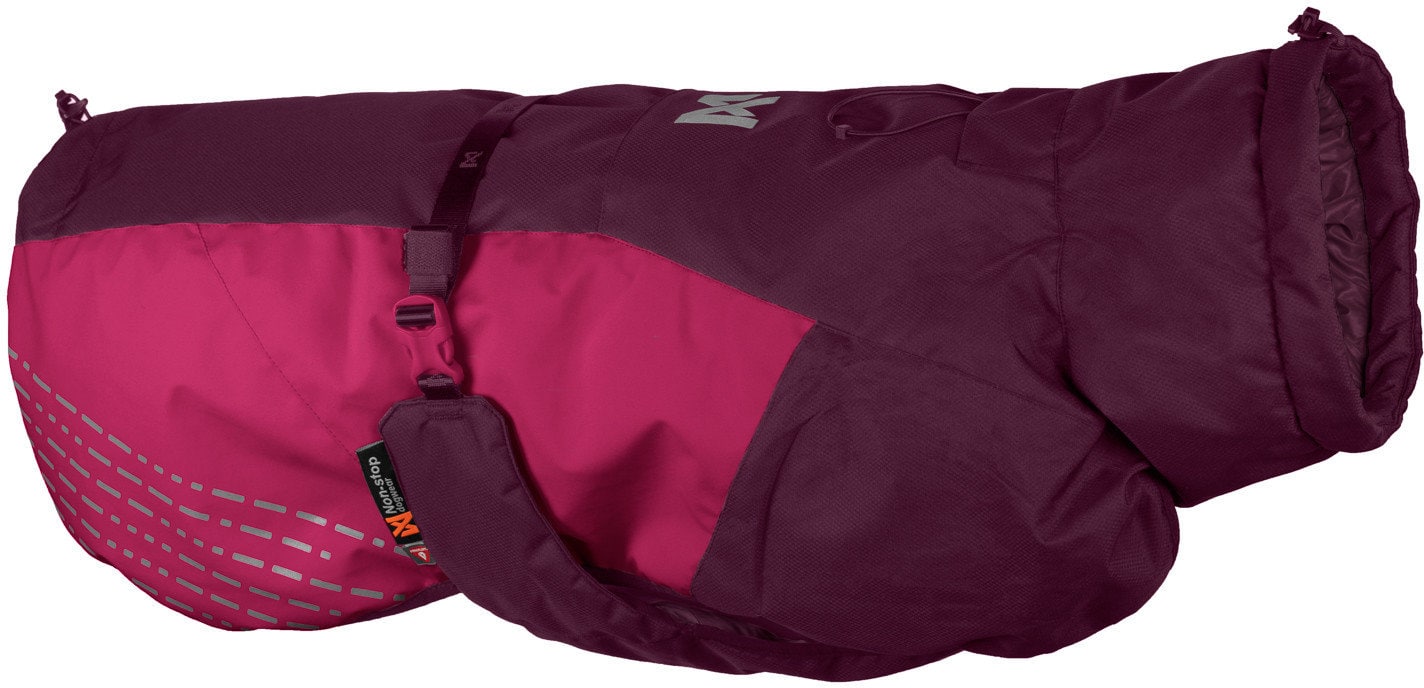
Non-stop Dogwear Glacier 2.0 Review: At a Glance
| My verdict | Love it |
|---|---|
| Primary tester | Shelby |
| Warmth | Warmer than Powder Hound; roughly comparable to Furness in our use |
| Bitter cold | Yes — and we can layer a sweater underneath |
| Rain and wet snow | Very good |
| Wind | Very good |
| Movement | Excellent for an active dog |
| Durability | A couple of years in with no shell snags |
| Harness | Under the coat, leash access at the neck |
| Leg straps | We don’t use them; Shelby hates them |
| Would I buy it again? | Yes |
The Glacier Is Properly Warm
The obvious thing I like about the Glacier is the warmth.
This isn’t one of those coats where I’m left wondering whether it is meaningfully doing anything. In our real-world use, I put it above the Powder Hound and approximately alongside the Furness.
And yes, I trust it when our Maryland winter gets bitter.
What makes Shelby’s setup particularly useful, though, is layering. When it gets seriously cold, she can wear another layer underneath the Glacier — something like the Climate Changer — and then the Glacier becomes the protective outer layer.
That ability to layer is actually part of the reason Shelby tends to wear the Glacier while Lucy tends to wear the Furness.
Why Shelby Gets the Glacier and Lucy Gets the Furness
This is a good example of why I don’t think there is one universal “best dog winter coat.”
Shelby gets cold enough that I sometimes want to build her winter setup in layers. The Glacier works really nicely for that: sweater or light insulating layer underneath, substantial weather-resistant coat over the top.
Lucy generally doesn’t need that extra layer unless it is exceptionally cold. For her, the Furness works brilliantly as the warm coat I can simply put on and go.
So although I think the Glacier 2.0 and Furness are in a similar warmth class in our use, I use them differently.
How Does It Handle Rain, Snow and Wind?
Really well.
We’ve had the Glacier for a couple of years, so this isn’t an impression from a couple of carefully chosen walks. It has been through actual winter weather.
Rain and wet snow haven’t given me cause for concern, and it performs very well in wind too. That’s important because insulation alone isn’t enough for a useful winter coat: if cold wind can cut straight through it, the dog can still lose heat quickly.
The Glacier feels like a genuinely protective outer layer rather than just something fluffy strapped to a dog.
Fit and Coverage
I don’t have a dramatic fit complaint here — which, in dog-coat terms, is praise.
It works nicely on Shelby. The coat sits securely, gives us useful winter coverage and still leaves her able to move normally.
We’ll be adding standardized measurements for coverage across the full Rebarkable coat test, including back, rear, chest and abdominal coverage. That should make comparisons between coats much more useful than simply saying one “covers more.”
Movement and Durability
Shelby is not a decorative test dog.
She’s active, she moves through brush, and her gear gets used like gear. One thing I particularly appreciate about the Glacier is that the outer shell feels substantial without turning the coat into something stiff and restrictive.
After a couple of years, we’ve had no snags in the shell.
That matters to me far more than whether a winter coat looks pristine in a studio photograph. A coat for an active dog needs to survive an active dog.
Is It Easy to Put On?
Yes. I don’t find the Glacier fiddly or frustrating to get onto Shelby.
As with any dog coat, if your dog dislikes clothing or fastening sounds, don’t turn getting dressed into a wrestling match. I have a separate guide on getting a dog comfortable wearing a coat.
Harness Under or Over the Glacier?
We use Shelby’s harness under the Glacier and access the leash connection through the opening around the neck area.
Whenever you layer a harness and coat, check the harness fit with the complete setup on the dog. Adding clothing underneath or over equipment changes how everything sits.
What About the Leg Straps?
We don’t use them.
Shelby hates leg straps, and the Glacier works well enough for us without making her tolerate something she strongly dislikes.
That’s not a criticism of their existence — rear straps can help stabilize coats in wind and movement — but a feature is only useful if it works for the dog wearing it.
Glacier 2.0 vs Ruffwear Powder Hound
For warmth, Glacier wins for me.
I like the Powder Hound, but I don’t think it gives Shelby the same level of winter protection. The Glacier also gives me the flexibility to layer underneath when temperatures really drop.
You can read my full Ruffwear Powder Hound review for the detailed comparison.
Glacier 2.0 vs Ruffwear Furness
This is much closer.
In terms of the warmth I see from the dogs, I put them in roughly the same territory. Both are coats I’d trust in genuinely cold conditions.
If you forced me to keep only one, though, I’d keep the Furness.
That doesn’t make the Glacier a worse coat. The difference is small enough that dog shape, layering and how you actually use the coat matter. In our house, the Glacier works particularly well as Shelby’s layered winter system, while the Furness is Lucy’s straightforward heavy winter coat.
The One Glacier I Don’t Enjoy Maintaining
We also have the wool version of the Glacier, and while the wool construction is interesting — especially for our upcoming insulation testing — the wool one is a pain to wash.
That deserves its own discussion rather than being treated as a flaw in this synthetic Glacier 2.0. But if you’re comparing the synthetic and wool versions, maintenance is absolutely something I’d factor into the decision.
We’re Going to Measure Its Insulation
Warmth is one of the most frustrating things about shopping for dog coats because manufacturers use terms like “warm,” “winter” and “insulated” without giving owners an easy way to compare products.
We’re changing that in our Rebarkable coat testing.
Alongside real-world testing, we’ll be running the coats through a standardized experiment to estimate their effective thermal resistance (R-value) under controlled conditions. That will let us compare how effectively each coat construction resists heat transfer rather than relying entirely on my subjective impression of warmth.
I’ll add the Glacier 2.0 results here once the full batch has been tested, including layered configurations where appropriate.
Would I Buy the Glacier 2.0 Again?
Yes.
After a couple of years of use, it has done exactly what I want a serious winter dog coat to do: it keeps Shelby warm, handles bad weather, allows her to move, layers well and has survived active use without the shell getting shredded.
That’s a very easy recommendation from me.
What About the Glacier 3.0?
Non-stop Dogwear has since replaced this generation with the Glacier Jacket 3.0.
Because the construction has changed, I’m not going to quietly swap the product name in this review and pretend I’ve tested the new version. We’re seeking a current Glacier 3.0 for the next round of testing, and once I’ve actually used it we’ll be able to compare the generations properly.
For now, this review should be read for exactly what it is: a long-term review of the Glacier 2.0 we’ve actually lived with.
The Bottom Line
The Non-stop Dogwear Glacier 2.0 is one of the winter coats that has earned a permanent place in our coat cupboard.
It’s warm, genuinely weather-capable, durable enough for an active coonhound and particularly useful if you want the option to layer underneath when temperatures get nasty.
I slightly prefer the Furness if I’m forced to choose one heavy winter coat, but the Glacier is not far behind — and for Shelby’s layered winter setup, it makes a huge amount of sense.
See how it compares with the rest of the coats we’ve tested in my best dog coats guide.
[ad_2]
Source link


