
[ad_1]
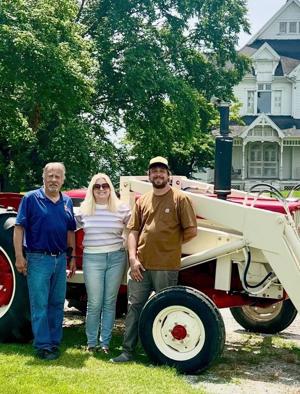
TOLONO — Scott Reifsteck started his agricultural journey halfway through elementary school, helping his father. Now, the farmer, who is approaching retirement, shares the same kind of relationship with his son, Alec.
How long has your family been farming?
I joined my father, Verne, on the farm full-time in 1976, when I rented my first land. Alec rented his first land in 2017. Dad started at this location in 1945 when he came home after the war. I have been working on the farm since I was old enough to start feeding the cattle, probably about third grade.
Where is your farm operation?
We are located in the Tolono area.
Where did your family come from?
Grandpa George Reifsteck came over from Germany in the 1800s and settled north of Tolono. That farm is still in the Reifsteck family.
What does your operation consist of? Is it strictly grain, livestock or other?
We are now primarily a grain operation growing corn and seed soybeans.
How many people in the family does the operation support?
The farm supports my wife, Mary, myself and my son, Alec. My brothers and I share in some land ownership.
How many generations are there?
Alec is the fourth generation to be in farming.
Do any family members in the farming operation also work other jobs?
My wife, Mary, has recently retired from nursing after being a registered nurse for over 40 years. My daughter, Bailey, lives in Nashville and works in business there. Alec has several part-time jobs off the farm.
Your farm equipment: Green (John Deere), Red (Case IH) or other?
We primarily run International equipment, but there is a smattering of the other colors there also.
What soil conservation practices do you employ on the farm?
We have been doing no-till beans since the early ’80s and minimum tillage on corn. We are just starting to work with cover crops.
What is the best time of year to be on the farm?
I love the spring season for new beginnings, summer for watching the crop grow, and fall for the cool, crisp weather and harvest. As I grow older, winter is becoming a little less attractive on the farm.
How have you seen farming change over the years?
The changes to farming have been massive over the years and seem to be accelerating, mainly driven by the adaptation of new technology. When I first started helping on the farm, we were using four-row equipment and a big tractor was less than 100 horsepower. Now, I have 16-row equipment and over 300-horsepower tractors, and that isn’t even big by today’s standards.
Through better plant breeding, crop yields have doubled since the early ’70s. All this has changed the size and efficiency of farm operations dramatically. The effect of technology isn’t just apparent in agriculture, but in everyone’s life. Everything is bigger, faster and easier.
Is it better? I think so, but I believe we will miss the vibrant small towns, many local businesses and the personal services they provided.
What makes farming such a good vocation?
Working with Mother Nature every day and the challenges that it presents on a daily basis is a part of what makes farming great. Then you get to work with great people and fellow farmers, which enhances your experiences.
For me though, I think that when I started farming, I got to have my father as a mentor, business partner and daily companion, and now as I approach retirement, I get to be on the other side and share those same experiences with my son Alec. That is what makes farming one of the best vocations that there is.
If you could change one thing about farming, what would it be?
If I only get one thing, it would be to smooth out the volatility of the markets.
Since that is not going to happen, I would want to be a better predictor of where the markets are going. No matter how hard I try to figure it out, the markets just seem to elude me. I can’t think of another farmer who wouldn’t want that.
[ad_2]
Source link


