
[ad_1]
A new large language model AI system may soon allow humans to converse with dolphins. Scheduled to debut in the coming months, researchers will test to see if DolphinGemma and its companion Cetacean Hearing Augmentation Telemetry (CHAT) system can translate and mimic some of the mammal’s own complex vocalizations. If successful, the breakthrough may represent the culmination of over four decades’ worth of work, documentation, and conservation efforts..
Dolphins are some of the Earth’s smartest and most communicative animals. Their social interactions are so complex that researchers at the Wild Dolphin Project (WDP) have spent the last 40 years attempting to decipher them. In the process, WDP has amassed decades’ worth of underwater audio and video documenting a single community of Atlantic spotted dolphins in the Bahamas. In the process, they have been able to correlate sounds with behavioral aspects like courtships, unique names, and dolphin squabbles.

Experts have long theorized it may be possible for humans to actually communicate with the cetaceans, but lacked technology advanced enough to parse and mimic the species’ underwater whistles, clicks, and burst pulses. With the rise of large language models (LLMs), researchers recently wondered if the same principles underlying LLMs could be applied to dolphin interactions. To test this possibility, WDP recently partnered with Google and the Georgia Institute of Technology, supplying engineers with a massive, labeled dataset of dolphin whistles, clicks, and burst pulses for use in LLM training.
The result is DolphinGemma, an AI model built using the same technology that runs Google’s Gemini systems. DolphinGemma is designed on roughly 400 million parameters to function in essentially the same way as predictive LLMs like ChatGPT—but for dolphins.
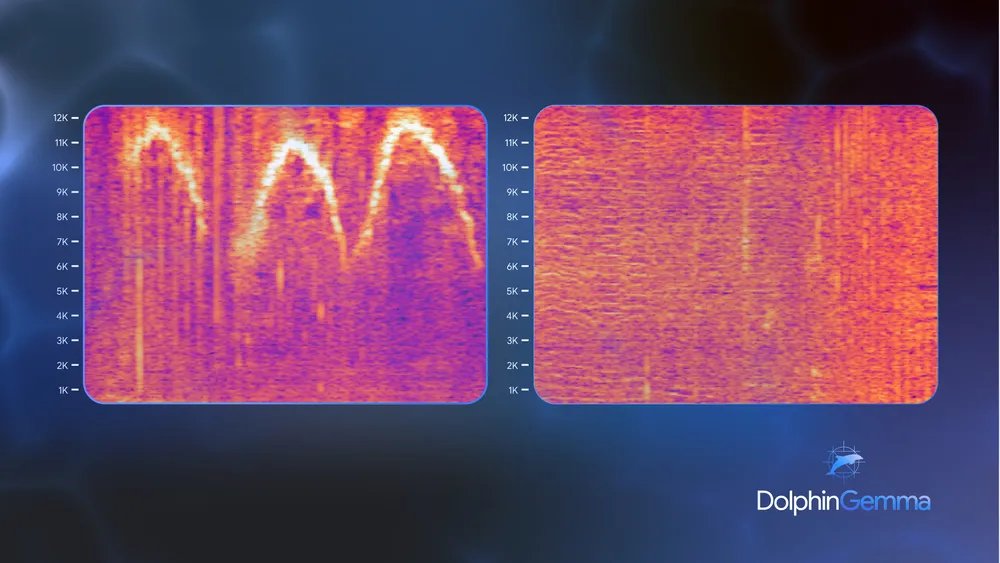
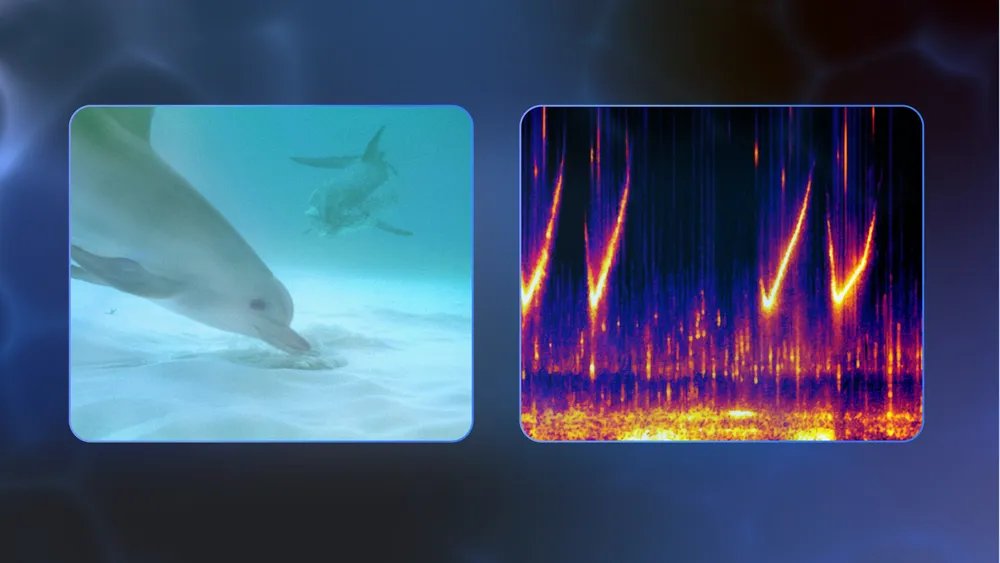
DolphinGemma first receives and interprets audio inputs, then predicts likely subsequent sounds for recreation. It is next partnered with the CHAT system installed on modified Google Pixel smartphones. CHAT isn’t designed to fully translate a dolphin’s natural language, but help humans convey and establish a more simplified, shared vocabulary. The plan is to ostensibly teach members of the WDP’s Atlantic spotted dolphin community a series of synthetic whistles with their favorite objects such as seagrass, sargassum, and even researchers’ scarves. Over time, experts hope that the dolphins will even learn to request desired items when they want to play.
There’s still a lot of work to be done before humans and dolphins bridge the interspecies communication gap. But with this creative use of LLMs, those underwater conversations are another step closer.

More deals, reviews, and buying guides
[ad_2]
Source link


